Exercise Your Empathy and Compassion as Leaders

December 19, 2015 | Posted in Leading Hartfully, Living Hartfully | By Gaia Hart
Research from the neuroscience field has demonstrated that we’re actually hard-wired to empathize with those around us, thanks to a neural network called mirror neurons. We see it when we hear of natural disasters, which causes a deep emotional response. Our empathy makes it so that we can’t help but feel concern and care for those we don’t even know. Not to be confused with sympathy. I watched a stirring, animated short video on Youtube regarding empathy with a little fox. Check it out. One of the points to the video was that when you make an empathetic statement, it should not start with “At least….). Oh how that resonated with me. How often do we mention something to a colleague that did not go well and they being their response with “At least it didn’t….” Responses like this don’t help and don’t solve the issue, they just annoy you.
Though we are hardwired for empathy, we don’t see evidence of this behavior in the workplace. It seems too mushy. Why are so many workplaces suffering from a lack of human compassion, connection, and shared belonging? We care about the realities our colleagues face in our organization – of the challenges and opportunities they see going unaddressed and thus, our compassion arises from our curiosity to listen and learn, paired with our innate drive to relate to the realities of those around us.
This type of compassion is vital in today’s leadership because it’s the key to the internal driving force found within each us to understand what motivates our employees, what matters to them, and how we can connect the work they do to the shared purpose that defines why we do what we do. Many studies have shown that compassion in the workplace leads to higher levels of employee engagement and job satisfaction and reduces employee absenteeism and burnout. The Gallup organization’s major study asks employees if they have somebody they can call a best friend at work and if they have been asked about how they contribute to the organization and shown by their leadership that what they do matters. If they don’t feel they matter, they walk.
Here are some steps to help you to reconnect with your sense of curiosity and empathy to bring more compassion into the workplace:
- See your team mates beyond the roles they play in your organization and remain curious about what challenges them along with the willingness to listen to what opportunities they see for our organization to succeed.
- Make efforts to discover their true strengths by seeking to better understand and know those we lead – of what serves as the fuel for their internal motivation.
- Be open about not having all the answers because it’s impossible for anyone to truly know or understand the complexities of the work we do today and its impact.
Most of the daily decisions we make are not driven from a rational mindset, but from a response to our emotionally-driven, network of mirror neurons where we seek commonality and connection both to the work we do and to those around us. And that means that compassion in leadership involves an honest and more outward-focused approach to leadership that allows us to tap into the native talents, creativity, and insights of those we lead. Leaders must show their team members that they are present to hear, understand, and provide them with what they require to succeed and thrive. How will you show compassion and empathy to your colleagues, clients or customer today?
Back: Back Up Important Plans, Documents, and Data
December 4, 2015 | Posted in Leading Hartfully, Living Hartfully | By Gaia Hart
Free yourself from the stress and worry over losing your hard work, your critical information, or your well-crafted plans. Create systems and methods to save yourself from accidents such as fire, flood, earthquakes, computer crashes, power surges, theft, unexpected emergencies, famine, or locusts.
Worrying about the possibilities of such loss or worse, after such a loss actually happens creates great stress and angst. Creating a back-up plan or strategy for saving your stuff creates an insurance policy and peace of mind. Have a fire-proof box at home, a safe deposit box off site with valuable documents or computer flash drives containing back up data and important information. You could ask a family member to keep copies of important documents and have a will and an estate plan in place in case of unforeseen circumstances.
Having a Plan B for major decisions just in case will free your energies to be put to better uses. What are your back-up plans for emergency contacts, travel situations, car accidents, natural disasters, or power outages? Do all your family members know the plans, codes, passwords, combinations, phone numbers, or hiding places of your back-up plans?
Forward: Constant Forward Motion Keeps us Moving in a Positive Direction

November 4, 2015 | Posted in Leading Hartfully, Living Hartfully | By Gaia Hart
When we coast for too long, it means we are going downhill. So like a shark, if we quit moving forward, we cease to live effectively. Keeping our sights on the possibilities and discoveries ahead of us while enjoying our present helps keep us moving in the direction of our dreams. When we are hopeful about what lies ahead of us, we look forward to a new day.
When we are in charge of creating our future, we get excited about moving forward to greet our goals. Sometimes we may choose to move sideways as a form of moving forward – as in a lateral move in our workplace. At times the answer is not always moving up, but out that makes the most sense, but it is always moving you forward towards where you want to be.
Popular psychology suggests that we are either moving forward towards pleasure or away from pain – either way, we are making a positive move that instills energy in our actions and gives us the power and the confidence to keep moving forward. Go where your heart leads you, go for it, go take a hike, or go explore a new destination.
If you don’t go, you won’t know. Taking the attitude of taking off towards where your dreams and desires lead you helps build your confidence, build your resilience to stress, and build on your life experiences. Be bold and go to where you think you need to go in order to get what you think you need. Taking brave steps toward your goals gives you energy and courage to pursue your dreams with guts, grace, and gusto.
Interesting people, activities, places, books, ideas, information, and association with other interesting things gets you stepping a little higher. Energy and inspiration by association seem to kick-start your battery. The key to attract interesting people is to create an interesting life, become an interesting person, and seek diversity to get your engine humming. When your mind stops exploring new interests and discovering new ideas, then your soul withers and your brain stops expanding to take in new information.
So what’s new and interesting on your To Do list today? Get interested in becoming interesting and see what kinds of energy sources you tap into. If your life seems like Bill Murray’s in the movie Ground Hog Day, then it’s time to make some changes and include more interesting things to add some spice to your days so they won’t all seem like re-runs that run you down.
Stretch Your Creative Muscle
October 23, 2015 | Posted in Leading Hartfully, Living Hartfully | By Gaia Hart
Creativity is one of those things many people thing they don’t possess. They may have had it as a kid and it was “conformed out of them” in the academia and workplaces unless you chose a creative field. If you ask a room full of children if they can draw, all hands go up. If you ask a room of adults the same question, only a few hands raise. What’s the deal with that? When did we lose it? I think it’s still there, but hasn’t been exercised in a while and has become flabby.
When faced with unique conditions, I would like to think we could get creative and figure out a way just like the astronauts did when they were in trouble, or like Cheryl Strayed in her book Wild about hiking the Pacific Crest trail solo. I can relate to that after spending 30 days in the wilderness on an Outward Bound backpacking experience. Necessity is the not only the mother of invention, but I think the other child is creativity. I try to exercise my creativity daily through art, photographs, cooking, sewing, designing décor, designing training and activities, and problem solving. If I don’t get a chance to exercise my creative muscle, I get antsy and itchy to do something, anything creative.
The following are six conditions which allow creativity — and ultimately, innovation — to flourish.
Solitude. Not withdrawal or being totally alone, but in the sense of spending time apart from the clichés and conventions of society to focus on one’s own thoughts and ideas.
Inactivity. Not loafing or goofing off, but planned inactivity as a break in one’s busy routine. I’ve known people to regularly set aside part of their daily schedule so as not to be interrupted in their thoughts.
Daydreaming. Daydreaming can be focused on out of box thinking and is often connected to inactivity. In daydreams, we make mental excursions into fantasy that breed creative activity. Several organizations have quiet rooms set aside for the purpose of stimulating out-of-box thinking. Reading magazine outside your normal arena to get ideas from other industries is a fascinating way to daydream. I also find watching the house hunter home shows from around the world helps me get ideas.
Gullibility. This is the willingness to suspend one’s personal beliefs and accept what comes from inside without insisting on rationality or logic.
Alertness and discipline. Although these qualities are necessary for productivity in any endeavor, they also have a special meaning in creativity.
Mental replay. Allowing oneself to revisit past creative efforts and resolution of past traumatic conflicts leads to analogies.
While most of the conditions require loosening of control and openness to the inner self, the last and most important quality is the willingness to put whatever you discover into action. What are you going to put into action to exercise your creative muscle?
Listening on Demand in a Demanding Generation of Workers

August 23, 2015 | Posted in Leading Hartfully, Living Hartfully | By Gaia Hart
Living up to our capacity at all levels includes our communication styles and ensuring they are up to snuff. Especially with the new brand of employees now in the workforce and those entering in the coming years, Generation Z. The research shows that Millennials now have an attention span of 12 seconds living in a constant state of partial distraction. Once the workers of Generations Z enter the workforce, they bring with them an 8-second attention span living in a state of partial attention.
What that means for us as team players and leaders is that we need to hone our communication styles, our leadership styles, the way we interact with the new breed of workers in much faster paced, on-demand type of environment. These workers are used to finding answers to problems on demand in the palms of their hands on mobile devices. They may not have the answers in their heads, but they have it in their hands. Our way of giving direction must be quick and agile, our listening also needs to be honed to their brief sound-bite type of 140-character Twitter-type of quips. No long conversations expected.
Solid relationships help us gain the respect and trust of others, our clients and our colleagues. It is important to be easy to work with, to have productive working relationships. People must sense that we genuinely care about them; this is how they feel inspired to work with and even follow us and to endear that trust and inspiration, we need to behave and communicate how others needs us to in order to feel heard. After all, sharing experiences with the world and having the world hear their stories is what Millennials and Gen Z are all about – just check out Instagram, Facebook, Snapchat, Twitter and the flavor-of-the-month site to upload stories and pictures.
Here are a few helpful practices to becoming an accomplished listener:
- First, our attitude: We must commit to listen to understand and learn.
- Put the other person at ease, maybe by sitting side by side rather than across a desk.
- Lean forward, comfortable eye contact, a slight smile.
- Quiet our mind — and stay fully present!
- Give affirmations: “OK,” “I see,” “Makes sense.”
- Ask clarifying questions.
- Maybe ask if we may repeat what we’ve heard to assure we have it right.
- Use silence, don’t rush to fill the space, likely the person will then continue, and we’ll deepen our learning. It is said, “Let silence do the heavy lifting.”
- Take notes, it will help us remember, and even more important, it is a sign of respect to the other person and will be appreciated.
It all begins with our willingness to understand and learn, and our effort to be patient and fully present. Conscious listening is difficult, especially in our crazy busy world today with so many urgencies and distractions. Keep in mind that we all want our stories to be heard and try to keep your distractions at bay while you lend an ear.
ALT – Alternatives, You Have Them

August 4, 2015 | Posted in Leading Hartfully, Living Hartfully | By Gaia Hart
You have a choice to either panic and stress out, or hit Any Key to open your windows to better options. Choose positive options that make you happy and add joy to your life. Are you truly doing what you want or are there alternatives? Realize you have a choice of alternatives in any situation to help you become unstuck. It’s your decision how to react to situations. Choose the alternative that will move you closer to what is truly important.
It’s our decisions that shape our destiny and our character. Are you choosing short-term gratification or long term satisfaction alternatives? Where are your decisions taking you? Even not choosing an alternative is making a decision to act in one way or another. Waiting to take no action forces the decision or alternative upon us. Be pro-active and research your alternatives to make the best decision for you at that time. Sometimes none of our alternatives seem like a good choice, but at least we do have alternatives, choices, and options. Take charge of yours and be in the driver’s seat of your emotional energy.
Employee Health & Well-Being Programs Need a Check-up
July 23, 2015 | Posted in Living Hartfully | By Gaia Hart
With 85% of U.S. companies employing 1,000 people or more offering some sort of workplace wellness program; you would think that Americans would be getting healthier. Yet merely offering a wellness program is no guarantee that employees know about it, take advantage of it, or improve from it. Gallup research shows that only 60% of U.S. employees are aware that their company offers a wellness program — and only 40% of those who are aware of the program say they actually participate in it.
Gallup’s research shows a clear link between employee engagement and well-being, with managers serving as the liaison between the two. Managers account for at least 70% of team variation on employee engagement. And engaging employees is vital to getting them involved in company-sponsored initiatives, because engaged workers are 28% more likely to participate in a wellness program
It takes great managers to engage employees. Over the past decade, Gallup has worked with hundreds of organizations to help their managers create engagement and boost employees’ well-being. To measure engagement, they ask employees to respond to 12 statements, including whether their supervisor (or someone at work) seems to care about them as a person. This statement in particular reveals whether workers feel that their manager truly cares about their well-being. Those who agree with it are more likely to be top performers and to produce higher quality work, and they are less likely to get sick, change jobs, or be injured at work. Trust is the biggest indicator of all that managers can have a positive impact and influence on employees.
Too many company wellness programs focus solely on Physical Well-Being. It needs to be a holistic approach to well-being and resilience and not just a weight-loss or smoking cessation program. Managers who engage their employees have an edge when it comes to boosting workplace well-being, though. Engaged employees are more than two times as likely as actively disengaged employees to say they are very or somewhat comfortable discussing their well-being with their manager.
Here are the Gallup-Healthways Well-being Five names such for the five parts that make up well-being.
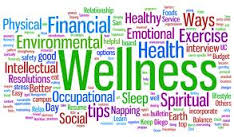
Gallup and Healthways have developed a comprehensive, definitive source of well-being measurement, the Gallup-Healthways Well-Being 5. This scientific survey instrument and reporting experience measures, tracks, and reports on the well-being of individuals and organizations. The five essential elements of well-being are:
- Purpose: liking what you do each day and being motivated to achieve your goals
- Social: having supportive relationships and love in your life
- Financial: managing your economic life to reduce stress and increase security
- Community: liking where you live, feeling safe, and having pride in your community
- Physical: having good health and enough energy to get things done daily
What are you doing personally to improve these five areas of your life? Don’t wait for your employer to take the initiative. Your health and life are waiting for you. Start today to change old habits that aren’t working for you and do a personal check-up on your own health and well-being using these five areas. Cheers to a healthy, wealthy life!
@ EASE – Ideas to Organize, Recognize, and Energize

July 4, 2015 | Posted in Leading Hartfully, Living Hartfully | By Gaia Hart
Quick and easy ideas for you to optimize your work and your life to live and lead Hartfully.
1. Skip lunch at your desk and take a walk outside to munch lunch while sitting in the fresh air. Start a walking club and pick your dream vacation spot and walk the mileage it takes to get there.
2. Replace your stuffy plaques with photos or posters which inspire you or afford a mental get-away.
3. Take turns bringing in creative treats to work on Friday.
4. If you have flextime, change your schedule according to the season for a change of pace.
5. Have a staff baby photo contest – the winner gets to leave an hour early.
6. Schedule more 3-day weekends to give yourself a break instead of putting all your vacation time in one spot. Our energy soars as we look forward to something special. Plan special things on Mondays to start your week out with higher energy.
7. Send thank-you notes to staff or customers who were particularly helpful or kind. Send notes home to staff spouses or parents telling them how terrific their partner or child is and thank them for their support.
8. Schedule a massage therapist to visit your office for seated massages during a particularly stressful time (budgeting cycles, end-of-month inventory) to decrease stress and increase productivity and well-being.
9. Conduct fewer meetings, remove the chairs to ensure they will be shorter, use email or conference calling, make meetings more fun and personable with surprises to keep people interested. People learn more when they are having fun.
10. Listen to books on tape, soothing music, or motivational tapes as you drive to work to make use of commuting time. Residents around the Washington DC area spend an average of 82 hours per year stuck in traffic…what are you doing to help increase your energy as you drive?