
The Art of Hartful Living
Humor and Laughter as Stress Busters

January 4, 2016 | Posted in Leading Hartfully, Living Hartfully | By Gaia Hart
As a Certified Laughter Leader for over a decade; I feel the need to share some resources and statistics with you on the benefits of laughter at home and in the workplace to help reduce stress. Just 20-30 minutes per session of the laugh exercises help reduce stress, diminish social isolation, and improve general well-being. It’s a hoot and it’s a hit!
The Association for Applied and Therapeutic Humor: www.aath.org is a big proponent of laughter, humor in your life and the benefits of Laughter Clubs and just plain laughter. Many members are in the healthcare field and who bring humor and healing together in different environments. Others of us were speakers and facilitators who help bring humor to life and to businesses to help people deal with stress or change, or tragedy.
The organization is a leader in the scientific side of the benefits of laughter and humor. AATH is the expert resource center for research on what we all know to be true – that laughter is the best medicine and that humor helps us cope with life. In these times of change, trauma, and trepidation about the economy, it is imperative that we keep our sense of humor about what’s important and also be aware of how others may deal with these uncertainties. The morale may be on shaky ground at your organization and you may be just the catalyst that is needed to help get things back on track and one way may be to start a Laughter Club.
* Nearly 2/3 of workers experiences some level of stress at work. 50% are somewhat stressed, while an additional 13% feel extremely stressed at work and only 9% feel that they are under no stress at all at work.
* Too much work (38%) and too little time (59%) are the two most common causes of stress in the workplace.
* Fatigue is the most frequently mentioned result of work-related stress that spills over into the lives of those surveyed 67%. Nearly 50% report that impatience and moodiness caused by work also has a negative impact on their lives at home.
These statistics were reported by a survey of American workers at Careerbuilder. What are you doing at work to prevent yourself and your colleagues from becoming statistics?
Exercise Your Empathy and Compassion as Leaders

December 19, 2015 | Posted in Leading Hartfully, Living Hartfully | By Gaia Hart
Research from the neuroscience field has demonstrated that we’re actually hard-wired to empathize with those around us, thanks to a neural network called mirror neurons. We see it when we hear of natural disasters, which causes a deep emotional response. Our empathy makes it so that we can’t help but feel concern and care for those we don’t even know. Not to be confused with sympathy. I watched a stirring, animated short video on Youtube regarding empathy with a little fox. Check it out. One of the points to the video was that when you make an empathetic statement, it should not start with “At least….). Oh how that resonated with me. How often do we mention something to a colleague that did not go well and they being their response with “At least it didn’t….” Responses like this don’t help and don’t solve the issue, they just annoy you.
Though we are hardwired for empathy, we don’t see evidence of this behavior in the workplace. It seems too mushy. Why are so many workplaces suffering from a lack of human compassion, connection, and shared belonging? We care about the realities our colleagues face in our organization – of the challenges and opportunities they see going unaddressed and thus, our compassion arises from our curiosity to listen and learn, paired with our innate drive to relate to the realities of those around us.
This type of compassion is vital in today’s leadership because it’s the key to the internal driving force found within each us to understand what motivates our employees, what matters to them, and how we can connect the work they do to the shared purpose that defines why we do what we do. Many studies have shown that compassion in the workplace leads to higher levels of employee engagement and job satisfaction and reduces employee absenteeism and burnout. The Gallup organization’s major study asks employees if they have somebody they can call a best friend at work and if they have been asked about how they contribute to the organization and shown by their leadership that what they do matters. If they don’t feel they matter, they walk.
Here are some steps to help you to reconnect with your sense of curiosity and empathy to bring more compassion into the workplace:
- See your team mates beyond the roles they play in your organization and remain curious about what challenges them along with the willingness to listen to what opportunities they see for our organization to succeed.
- Make efforts to discover their true strengths by seeking to better understand and know those we lead – of what serves as the fuel for their internal motivation.
- Be open about not having all the answers because it’s impossible for anyone to truly know or understand the complexities of the work we do today and its impact.
Most of the daily decisions we make are not driven from a rational mindset, but from a response to our emotionally-driven, network of mirror neurons where we seek commonality and connection both to the work we do and to those around us. And that means that compassion in leadership involves an honest and more outward-focused approach to leadership that allows us to tap into the native talents, creativity, and insights of those we lead. Leaders must show their team members that they are present to hear, understand, and provide them with what they require to succeed and thrive. How will you show compassion and empathy to your colleagues, clients or customer today?
Back: Back Up Important Plans, Documents, and Data

December 4, 2015 | Posted in Leading Hartfully, Living Hartfully | By Gaia Hart
Free yourself from the stress and worry over losing your hard work, your critical information, or your well-crafted plans. Create systems and methods to save yourself from accidents such as fire, flood, earthquakes, computer crashes, power surges, theft, unexpected emergencies, famine, or locusts.
Worrying about the possibilities of such loss or worse, after such a loss actually happens creates great stress and angst. Creating a back-up plan or strategy for saving your stuff creates an insurance policy and peace of mind. Have a fire-proof box at home, a safe deposit box off site with valuable documents or computer flash drives containing back up data and important information. You could ask a family member to keep copies of important documents and have a will and an estate plan in place in case of unforeseen circumstances.
Having a Plan B for major decisions just in case will free your energies to be put to better uses. What are your back-up plans for emergency contacts, travel situations, car accidents, natural disasters, or power outages? Do all your family members know the plans, codes, passwords, combinations, phone numbers, or hiding places of your back-up plans?
What Workers Adore and Abhor: Mentors and Tormentors

November 19, 2015 | Posted in Leading Hartfully | By Gaia Hart
Mentors affect teams positively and tormentors infect teams. We can look at traits employees adore and abhor in their mentors and tormentors and what they can relate to themselves as they look into their leadership mirror to see how they come across to others. How do you rate on the Mentor/Tormentor scale? Are you adored or abhorred? What changes can you make today to move towards adored mentor status?
Leadership traits that people adore
- Has a clear vision of how people’s work meets the leader’s expectations.
- Provides timely, clear, constructive feedback.
- Expresses appreciation and gives credit where credit is due.
- Actively listens and answers questions.
- Treats others with respect and kindness.
- Consistently fair in their treatment of others.
- Trains, develops, and grows their people.
- Willing to jump in and help out when things become difficult.
- Has an open door policy and is available.
- Supportive and protective of their people when things go wrong.
Leadership traits that people abhor:
- Indecisive
- Foul-mouthed
- Plays favorites
- Doesn’t take time to learn about employees personally, treats them as cogs in the production wheel
- My way or highway thinking
- Takes credit for your work
- Doesn’t take action when needed, particularly for discipline problems
- Has clunky communication skills and low emotional intelligence
- Does not respect younger workers and their contribution
- Kisses up and kicks down
Obviously, this list is not comprehensive. There are many great and not-so-great leadership traits we could add. One of the primary skills of strong leaders is excellent communication. Every item on the list above is affected by communication style and emotional intelligence.
Here are a few questions you can ask yourself to improve your leadership skills and help you get the results you want:
How do you treat your people? To help answer this question, you might ask yourself, “How do my people treat me?” For example, if you are warm and friendly, your people will probably be warm and friendly in return. On the other hand, if you are cold and blunt or if your demeanor is unpredictable, your team will likely go to great lengths to avoid you. Be approachable and consistent in dealing with others and they will reciprocate. We are mirrors for how people treat us. If you notice that others are not treating you well, not saying hello and good-bye, then look inward to see if they are mirroring your demeanor.
Does your team understand how what they do contributes to the success of the organization? Don’t assume they know, even if the answer may be obvious to you. Recent research indicates that somewhere between 70% and 95% of people do not know how what they do contributes to their organization’s success. If most individuals lack this understanding and you haven’t conveyed it to them, then you are missing the opportunity to increase their motivation, and the likelihood that they will be as productive as they could be. Ask them if they know their impact on the organization’s success, listen to their response, and be prepared to fill in the gaps. According to Dan Pink in his book Drive; he states that motivation today relies on purpose, autonomy and mastery. If they don’t know their purpose, are not given the space to do it and to learn it, then you can be sure you’re a tormentor they abhor and they won’t be there for long. Do you express appreciation for a job well done to each person on your team at least once a week? Particularly with the new workforce, they expend on-demand feedback and may not wait around for it. The younger generations in and entering the workforce today are serial freelancers with the skills to get jobs at other places and won’t hesitate to jump ship and go out on their own. Make sure you are doing what you can to retain them and be their mentor they adore.
Forward: Constant Forward Motion Keeps us Moving in a Positive Direction

November 4, 2015 | Posted in Leading Hartfully, Living Hartfully | By Gaia Hart
When we coast for too long, it means we are going downhill. So like a shark, if we quit moving forward, we cease to live effectively. Keeping our sights on the possibilities and discoveries ahead of us while enjoying our present helps keep us moving in the direction of our dreams. When we are hopeful about what lies ahead of us, we look forward to a new day.
When we are in charge of creating our future, we get excited about moving forward to greet our goals. Sometimes we may choose to move sideways as a form of moving forward – as in a lateral move in our workplace. At times the answer is not always moving up, but out that makes the most sense, but it is always moving you forward towards where you want to be.
Popular psychology suggests that we are either moving forward towards pleasure or away from pain – either way, we are making a positive move that instills energy in our actions and gives us the power and the confidence to keep moving forward. Go where your heart leads you, go for it, go take a hike, or go explore a new destination.
If you don’t go, you won’t know. Taking the attitude of taking off towards where your dreams and desires lead you helps build your confidence, build your resilience to stress, and build on your life experiences. Be bold and go to where you think you need to go in order to get what you think you need. Taking brave steps toward your goals gives you energy and courage to pursue your dreams with guts, grace, and gusto.
Interesting people, activities, places, books, ideas, information, and association with other interesting things gets you stepping a little higher. Energy and inspiration by association seem to kick-start your battery. The key to attract interesting people is to create an interesting life, become an interesting person, and seek diversity to get your engine humming. When your mind stops exploring new interests and discovering new ideas, then your soul withers and your brain stops expanding to take in new information.
So what’s new and interesting on your To Do list today? Get interested in becoming interesting and see what kinds of energy sources you tap into. If your life seems like Bill Murray’s in the movie Ground Hog Day, then it’s time to make some changes and include more interesting things to add some spice to your days so they won’t all seem like re-runs that run you down.
Stretch Your Creative Muscle
October 23, 2015 | Posted in Leading Hartfully, Living Hartfully | By Gaia Hart
Creativity is one of those things many people thing they don’t possess. They may have had it as a kid and it was “conformed out of them” in the academia and workplaces unless you chose a creative field. If you ask a room full of children if they can draw, all hands go up. If you ask a room of adults the same question, only a few hands raise. What’s the deal with that? When did we lose it? I think it’s still there, but hasn’t been exercised in a while and has become flabby.
When faced with unique conditions, I would like to think we could get creative and figure out a way just like the astronauts did when they were in trouble, or like Cheryl Strayed in her book Wild about hiking the Pacific Crest trail solo. I can relate to that after spending 30 days in the wilderness on an Outward Bound backpacking experience. Necessity is the not only the mother of invention, but I think the other child is creativity. I try to exercise my creativity daily through art, photographs, cooking, sewing, designing décor, designing training and activities, and problem solving. If I don’t get a chance to exercise my creative muscle, I get antsy and itchy to do something, anything creative.
The following are six conditions which allow creativity — and ultimately, innovation — to flourish.
Solitude. Not withdrawal or being totally alone, but in the sense of spending time apart from the clichés and conventions of society to focus on one’s own thoughts and ideas.
Inactivity. Not loafing or goofing off, but planned inactivity as a break in one’s busy routine. I’ve known people to regularly set aside part of their daily schedule so as not to be interrupted in their thoughts.
Daydreaming. Daydreaming can be focused on out of box thinking and is often connected to inactivity. In daydreams, we make mental excursions into fantasy that breed creative activity. Several organizations have quiet rooms set aside for the purpose of stimulating out-of-box thinking. Reading magazine outside your normal arena to get ideas from other industries is a fascinating way to daydream. I also find watching the house hunter home shows from around the world helps me get ideas.
Gullibility. This is the willingness to suspend one’s personal beliefs and accept what comes from inside without insisting on rationality or logic.
Alertness and discipline. Although these qualities are necessary for productivity in any endeavor, they also have a special meaning in creativity.
Mental replay. Allowing oneself to revisit past creative efforts and resolution of past traumatic conflicts leads to analogies.
While most of the conditions require loosening of control and openness to the inner self, the last and most important quality is the willingness to put whatever you discover into action. What are you going to put into action to exercise your creative muscle?
? Question Your Actions – Are They Merely Obligations?
October 4, 2015 | Posted in Leading Hartfully | By Gaia Hart
To avoid having to say no to obligations, schedule both your personal and professional time on your calendar. When somebody requests your time, your calendar can say no for you. This helps ease the guilt in some of us who have a hard time saying no to requests on our time.
If what you are doing is not moving you forward toward one of your written goals, life’s mission, or ideal vision, then it may not be something you should be doing. How does your future look based on your current actions? Are you reacting to somebody else’s goals and expectations, or are you working towards your own?
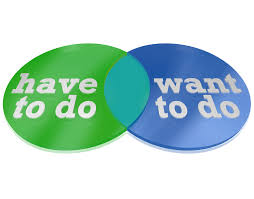
You may be surprised at how much time is freed up when you renounce obligatory actions and only take on actions which come from your heart. Question the requests made on your time. Remember that our time is our life energy? Is that request worth a part of your life? Question how you want to spend your time and your life and guard your time as ferociously as you guard an “important” appointment. If we don’t guard our time, nobody else will either. Is your activity a “have to”, a “should do”, a “want to” or an “I’d love to.”? Your answer will tell you if it’s an obligation or not.
Four Core Needs of Every Employee
September 23, 2015 | Posted in Leading Hartfully | By Gaia Hart
The Harvard Business Review interviewed more than 19,000 people, at all levels in companies, across a broad range of industries asking the question of what stands in the way of our being more satisfied and productive at work.
The results were that people feel better and perform better and more sustainably when four basic needs are met:
- renewal (physical);
- value (emotional);
- focus (mental);
- and purpose (spiritual).
No big surprises in the answers as this is what I’ve been teaching for decades that when we feel more energized, appreciated, focused and purposeful, then we perform better. I recently read several articles in Training journals about the importance of play at work and gamification in the learning arena helping workers learn better and having more fun at work improves productivity. Really? They are JUST NOW printing these articles?? Those of us in the Recreation and Training industries have known for many decades that work made fun gets gone and good times lead to good business. Also that laughter and learning go together to improve retention. When we are more fully engaged, present, comfortable, centered and on purpose, we do better all the way around in life.
When we get to rest and renew our energy during the day, we are better able to focus, handle workloads and be creative. One reason to get out of your office over your lunch break. Your brain and your body need a rest so you come back refreshed and renewed.
Feeling valued creates a deeper level of trust and security at work, which frees us to spend less energy seeking and defending our value, and more energy creating it. Having a sense that what we do matters and serves something larger than our immediate self-interest toward our personal purpose which hopefully is aligned with the organizational purpose is a grand source of motivation.
What’s surprising about our survey’s results is how dramatically and positively getting these needs met is correlated with every variable that influences performance. What they found that meeting even one of the four core needs had a dramatic impact on every performance variable in the study. When all four needs are met, the effect on engagement rises from 50 percent for one need, to 125 percent. Engagement, in turn, has been positively correlated with profitability.
You can start with just one core need and add the others as the previous one becomes habit and ingrained in your organizational culture. Only 20 percent of respondents said they were encouraged by their supervisors to take renewal breaks during the day. By contrast, those who were encouraged to take intermittent breaks reported they were 50 percent more engaged, more than twice as likely to stay with the company, and twice as healthy overall. Leaders need to question their outdated assumptions that that performance is best measured by the number of hours employees puts in — and the more continuous the better — rather than by the value they generate.
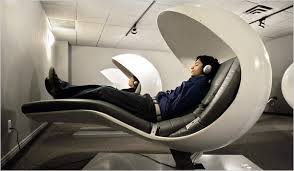
In a recent interview with Arianna Huffington of The Huffington Post empire regarding nap pods she has installed in her organization; she stated that she does not pay her staff for their stamina, she pays them to for their creative brain power and if they are too tired to think, they are not bringing creative ideas to the table. So a renewal nap of 20 minute is certainly worth it in the long run. You can’t argue with that.