
The Art of Hartful Living
What is a High Sensation Seeking Person?

September 8, 2026 | Posted in Living Hartfully | By Gaia Hart
Following the trail of learning all I could about Highly Sensitive People, (remember depth of processing is a trait for a Highly Sensitive Person), I found it wasn’t the whole story and not completely true of me and my experiences and my traits. I realized that I also had very high scores in Dr. Elaine Aaron’s quiz on High Sensation Seekers. It turns out that I’m at the tippy top of both traits – meaning all six of my senses are on overdrive and wide open at all times and I need novelty, thrills, challenging experiences and I also need quiet time, rest, and to cautiously approach the challenges. That is where Dr. Tracy Cooper’s book Thrill: The High Sensation Seeking Highly Sensitive Person comes in.
Books and Docuseries by Dr. Tracy M. Cooper, Ph.D. – one of the leading authorities and researchers on Highly Sensitive People and High Sensation Seekers. https://drtracycooper.org/
Thrive: The Highly Sensitive Person and Career
Thrill: The High Sensation Seeking Highly Sensitive Person
Consulting-Producer of Sensitive Men Rising-The Documentary Series: https://sensitivemenrising.org/
Thrill is the first book of its kind to really explain what it means to be a High Sensation Seeking Highly Sensitive Person. And it does so brilliantly to put into perspective what it means to live with such traits and how to strategically create and manage your life to avoid overwhelm and avoid boredom. Looking back at my life, it explains so much of why I did and felt and experienced what I did and it helped me reframe all of those experiences.
High Sensation Seekers can have all four characteristics and in differing doses of each characteristic, or they can have a variety of mixtures of any or all of the four. I happen to have a very high dosage of all four characteristics of the trait of a High Sensation Seeker. No wonder I chose the type of career, jobs, hobbies, sports, relationships, and living conditions that I did – it all made sense after reading his book.
The four characteristics can be remembered by the pneumonic BAND
Boredom susceptibility: is an inner state of mind where optimal stimulation, arousal, and intrigue are lacking. Boredom easily creeps in to High Sensation Seeker’s lives in even the most modest amounts. Boredom and an inability to tolerate repetitive our routine experiences can cause irritability, agitated states, restlessness, or even depression. Those with this trait find themselves seeking an escape from the monotony of routine and dull existences and tend to shake things up in travel, living conditions, jobs, relationships or hobbies/sports to regain the feeling of variety and intensity and learn something new again. They are curious and continuous learners.
Adventure and thrill/risk seeking: is one way to avoid the boredom susceptibility by taking the leap, taking on the challenge, and sometimes discounting the risk in order to experience the thrill of the activity/decision. The excited feeling of being truly alive and in the rapture of the moment caused by adrenaline to induce an optimal state of arousal. It has been described as a genetically influenced tendency to seek physical challenges such as rock climbing, skiing, SCUBA diving, sky diving and other similar pursuits that are intrinsically rewarding to the brain. It’s not necessarily reckless, it is challenge by choice intersected with unknown and potential outcomes with a cautious approach.
New experiences and novelty seeking: is the third characteristic and it does not necessarily have to be thrill seeking, just something new. Those with this trait are very curious about the world, how things work, researching, reading, experiencing, tasting, feeling, listening and seeing new things around them or traveling to go experience them. Foodies are new experience seekers – the tastes, the textures, the ambiance, the smells, how it looks on the plate and the community of eating together – all new and novel experiences. Creatives usually have this trait – seeking new ways to create something, do creative problem solving, comedians thinking of new ways of looking at the world, creating art as a way to make new things, sewing, cooking, painting, spiritual journeys. They have a strong desire for personal growth and exploration within and all around them.
Disinhibition: shows up in ways that may buck the social norms or expectations of family/friends/society/colleagues. Those with this trait can demonstrate impulsivity, follow their dreams no matter what, test driving new ways of being/living/dressing/exercise/financial investments/drugs/sexuality or bending the rules to experience more stimulation and reject the boredom of the mundane for excitement and surprise and feeling alive. It can show up as boldness and YOLO (you only live once) and they can be the leaders to instigate the bold actions/experiences just to see how it feels. They take calculated (and sometimes not so calculated risks) just to get the sensation of the outcome.
So there lies the paradox if you are a Highly Sensitive Person, that trait generally is risk avoidant while the High Sensation Seeker gets a rush out of novelty, thrill seeking, adventure, and seeks out challenges that may be risky to feel the sensation with depth and purpose. Therein lies the foundation of living with both traits, with one foot on the gas and one foot on the brake as the Sensitive Sensation Seeker moves through the world trying to honor both traits. Particularly if you have high amounts – all characteristics of both traits more than those with a sprinkling of one or two characteristics of a trait. It’s all about nuance.
To learn more about the paradox of Thrill – pick up Dr. Tracy Cooper’s books on the topic and watch the 3-part docu-series of Sensitive Men Rising. It will open your eyes to what you or a loved one may be experiencing and help you reframe it.
More to come on Sensitive Sensation Seekers – AKA – Wild Sensitives.
What is a Highly Sensitive Person? Resources for You to Find Out.
March 14, 2026 | Posted in Living Hartfully | By Gaia Hart
After watching the Prime Video Documentary Sensitive: The Untold Story, intuitively I knew I had to learn more about this thing called a Highly Sensitive Person and I dove in headfirst into everything I could find on the topic. How could it be that I’d been in the self-help, professional development, personal enrichment, coaching field for decades as a certified facilitator of several personality trait instruments, and I’d never heard of such a thing.
It was Dr. Elaine Aron who started researching the topic of High Sensitivity, officially known as Sensory Processing Sensitivity as a trait in 1991 and it further rolled out in the later 1990s and has been growing in understanding ever since. HSP is not a disorder nor a disability. It is a trait that some would call a superpower that 20-30% of the population exhibits with further breakdowns in percentages as you combine High Sensation Seeking and a lower percentage of Extroverts vs. Introverts with this trait. It can be explained using the acronym DOES. Here is a brief example representing each of the letters with an expanded explanation on Dr. Aron’s site HSPerson. Be sure and read her books and workbooks as well to give you a jump-start into your journey – found on her site.
- Depth of Processing: Do you reflect more than others about the way the world is going or any other topic, need a little more time to make decisions, known for good ideas and thoughtful internal dialog?
- Over Stimulation: Do you experience overstimulation and burn out due to sheer amount of incoming information, need a quieter/calmer environment to think and process, need more sleep or downtime to recoup?
- Empathy & Emotional Responsiveness: Are you more easily moved to tears of joy, gratitude, relief or equally moved to laughter, do you tend to react with emotions similar to others – you catch their emotions and feel similarly, are more distressed by violence, horror, bullying in TV shows/movies, or are disturbed more than others by social injustice, unfairness, arguing?
- Sensitive to Subtleties: Do you notice details other normally miss, or sense how somebody may feel, if things are out of sorts or if décor is moved around, more aware of small environmental or house noises and temperatures, susceptible to humidity and temperature changes, textures, tastes, light and sounds?
You can read more about her research, find resources, take the self-tests to see if you are a Highly Sensitive Person or a High Sensation Seeker on her website HSPerson.com. She also has a link to the first-ever documentary film series covering the topic of Highly Sensitive Men called Sensitive Men Rising that was just released in the past couple years – so this is a new and burgeoning area of study. The resource page on HSPerson has many other books and articles: HSPerson. Here’s a link to the Sensitive Men Rising site.
I found a guide who was also a High Sensation Seeking, Highly Sensitive Person who could customize my learning curve specifically tailored to my life. Having her was an invaluable resource in shortening the time it took me to get up to speed and understand how knowing of these traits and how they fit together and fit into every single area of my life was essential to moving forward making the right decisions for me to live more attuned, content, and awakened to what I need in my life to fully support who I am and who I am becoming. It was also an amazing experience to reframe so many experiences in my former years, why they affected me in such a manner, and how not to become dysregulated and burned out in the future.
Another favorite resource I read regularly is the Highly Sensitive Refuge blog. They offer oodles of articles on all topics concerning Highly Sensitive People and I find it extremely helpful. I always have it pulled up on my phone to read while in waiting rooms for one thing or another. It’s positive and has impactful tips that you can implement immediately.
Getting Grounded….With Goats, Forest Bathing & the Beach

March 9, 2026 | Posted in Living Hartfully | By Gaia Hart
I kept hearing about being grounded, or getting grounded. Not like your parents grounded you when you were in troubled and told you couldn’t go out. This is a positive form of grounded – finding your center, physically healing, feeling rooted, mental nourishment. When I dug deeper into it, Grounding can be a mindfulness practice such as meditation or deep breathing or Earthing, which is a Grounding technique that involves direct contact with the Earth and both have many positive effects on both mental and physical health. I had learned along that way that digging in the dirt gardening, walking barefoot in the grass, touching animals who are on the ground and hugging trees all offered positive, soothing effects on our body and brain. You can find documentaries, websites selling grounding pads, and medical journal articles on the topic.
More insight comes from the National Institute of Health website, “Multi-disciplinary research has revealed that electrically conductive contact of the human body with the surface of the Earth (grounding or earthing) produces intriguing effects on physiology and health. Such effects relate to inflammation, immune responses, wound healing, and prevention and treatment of chronic inflammatory and autoimmune diseases. Connecting the body to the Earth enables free electrons from the Earth’s surface to spread over and into the body, where they can have antioxidant effects.” Find more insight from their peer reviewed research – warning, it’s very science in nature: https://pmc.ncbi.nlm.nih.gov/articles/PMC4378297/
I add this insight from NIH because initially it sounds a little woo-woo for many people. I tried using the pads in my home connected to the electrical outlets and frankly, I didn’t see/feel anything different and it was quite cumbersome and unsightly and I kept getting tangled in cords, so in the trash bin they went. I decided it’s better for me to be barefoot in the grass, snuggle with goats, and do some gardening. Some of the experts purport that the healing factors are immediate – within nanoseconds, so I don’t have to spend too much time standing or doing yoga in my yard to get benefits. I can mix up my methods.
Beyond the benefits of petting an animal to reduce your heart rate and stress, and calms your brain. If that animal is standing on the ground and you are touching it, you get the powerful effects of grounding as an added bonus. Enter Smith Farm Goat Sanctuary, a nearby farm of 57 goat surrenders and rescues where I volunteer so I can be surrounded by those little cuties and be a part of community events offering special events and experiential education about the farm and the goats. They are a 501C3 non-profit organization as well. I became a goat guardian to Blanche, one of their Golden Girls and that donation to her ensures she is well-fed for the year. You too can become a guardian of the goat and a herd hero with your donations to their cause. These goats are such goofballs, they provide more than a fur fix. They promote laughter, oxytocin, connection, snuggles, grounding, and other mental and physical health benefits – what I call practicing safe stress.
More reasons to adopt a pet, go for walks, garden, get outside and do forest bathing or maybe hang with some goats, cows, horses, sheep or your favorite furry animal. Forest bathing is a Japanese practice of slow, mindful immersion in nature to improve physical and mental health. It involves using all senses—sight, sound, smell, touch—to connect with the forest environment, reducing stress (cortisol), lowering blood pressure, and boosting immunity. No hiking is required; it is a gentle, therapeutic, sensory-focused, and relaxing experience. Bonus points for touching the plants – even more helpful to get grounded surrounding yourself among the negative ions created by pine needles brushing up against one another in the wind.
One 2007 study showed that forest therapy reduces cortisol, a stress hormone. Research conducted in 2010 found that people who walked in the forest twice a day for two hours (so, four hours of walking a day) had greater levels of cancer-killing proteins and immune cells.
In 2011, yet another study found that forest therapy was beneficial. It reported that it had a positive impact on blood pressure and adiponectin, a protein that helps regulate blood sugar levels. Taken together, the science on forest bathing makes a convincing argument that spending time communing with nature (Article from the Cleveland Clinic) can improve stress, anxiety and depression.
Similarly, walking on the beach with waves crashing offers the negative ion electrical charge when water crashes onto water – the same with waterfalls and fountains. Bonus points for walking barefoot in the sand and water to get connected to the Earth and its electrical charges. So get outside, get some sun and fresh air and get closer to nature and animals and it will help your mental and physical health as you get grounded.
Similarly, walking on the beach with waves crashing offers the negative ion electrical charge when water crashes onto water – the same with waterfalls and fountains. Bonus points for walking barefoot in the sand and water to get connected to the Earth and its electrical charges. So get outside, get some sun and fresh air and get closer to nature and animals and it will help your mental and physical health as you get grounded.
Cognitive, Psychological, and Emotional Hushing
March 7, 2026 | Posted in Living Hartfully | By Gaia Hart
Continuing along the path of hushing out the noise, take a look at how you can quiet the excess noise at many levels to live more Hartfully with less distraction from things that don’t add value to your days.
Consider some serious editing of old habits, patterns of behavior that no longer serve you, relationships or workplaces or the type of work that has become toxic to who you are becoming. Question why you do what you do and how you do what you do, what is it that directs the way you behave? Are you truly responding to the present moment, situation, or person, or it is just a habitual reflex and reaction vs. a thoughtful response? What kinds of behavior, people, things, situations and ways of being don’t feel comfortable anymore? Are you getting antsy about something or it just doesn’t fit the same as it did for you earlier in life? You may just be running on auto pilot and you may need to shake things up and ask the hard questions of yourself to hush some of that noise that’s in your head.
Cognitive hushing is editing out information, knowledge, news, opinions, movies/TV shows/radio shows/social media/other forms of media that steal your time and take up space in your brain for no good benefit. Doom scrolling with no real purpose is like junk food for your brain. If you feel the need to zone out in front of a screen, at least learn something from an expert on a topic of value that will benefit your life and move you in the direction of your goals in some way. Understanding we all need down time and some brain candy now and again, as long as it’s not a steady diet. You can’t solve all the world’s problems, so why are they taking up space in your head? Control what comes into your sub-conscious by purposefully choosing what you read, watch, listen to on a daily basis. A handy reminder is that other people’s opinions are none of your business – form your own opinions on things that actually matter to you.
Psychological and emotional hushing is getting rid of the noise, like a buzzing gnat in your mind of unfinished business, anxiety, worry, doubt, fear, and a host of other emotions that are completely controlled by what your mind thinks about them. It can all change with a decision and the moment a decision is made, things start to change. It takes making a decision time and time again before it becomes a habit and there will be some back-sliding, but it gives you inertia to keep going in the positive direction. Emotional noise can come from other people who are not good for you, maybe unsafe physically or emotionally, abusive people, negative thinkers, narcissists, bullies, those who ghost you or don’t respect your time or your boundaries, users, adversarial types, energy vampires who suck all the time/energy out of you, or those that live below the line.
I call it liberation from low vibration. You want to distance yourself from the low-functioning, low vibration people, places, things, thoughts, and habits that have been allowed to enter your life. More posts about low vibration and high vibration later. If you’ve got a constant scrolling of bad news, negative thoughts, upsetting anxiety running on a continuous loop, you may choose to seek professional help to walk away from those things that are holding you back from living Hartfully. If you feel stuck, sick much of the time, sick and tired of how things have been going for you or tired of the negativity, there is help available. Because there is a better way to be and show up and it’s up to you to decide how firm or porous your boundaries are going to be and what you allow into your brain and your life.
Choose to hush the noise, let go of the cognitive, psychological and emotional baggage that is weighing you down to lead a calmer life in congruence with your heart and fully alive. Journaling is a great first step. Do a brain dump of what’s on your mind to start your day with a fresh slate and clear mind.
I’ve also found that when I get ideas and noise creeps into my mind in the middle of the night, I just tell Alexa to give me a reminder of that later in the morning so I can release it from my brain knowing I’ll be reminded the next mornings where I can write it down or do something with it. That simple act allows me to go back to sleep feeling lighter from the release of that thought without having to wake up to write it down or awaken my eyeballs to type a reminder on a screen. I just tell Alexa what to do. I also keep all screens out of my bedroom for a more peaceful sleep.
More Than Decluttering & House Hushing – It’s Space & Mind Hushing
March 4, 2026 | Posted in Living Hartfully | By Gaia Hart
Good ideas and styles stick around and are recycled by another name when the latest people to learn about it tack on another moniker and call it a new idea. That’s exactly what happened with getting rid of extra stuff and living more minimally and organically – something I covered in my first book Hit Any Key to Energize 30 years ago. Getting rid of stuff became decluttering, then Marie Kondo’ing if it didn’t spark joy out it went and now I’m seeing headlines that house hushing is all the rage with a bit of a different flavor. There really isn’t a need to move everything out of a room — who’s got time for that and who has the extra space.
Our environment we create represents the environment going on in our minds. It’s the outward expression of the clutter we have between our ears. If you’re working on quieting the noise on the inside and doing “the Work” with a capital W, then you need to take a look at your environment and what you’re surrounding yourself with. I’m guessing there’s more visual pollution than you’d like. A good place to start is to stop your unfettered consumerism, stop the ads coming into all of your mailboxes and dare I say it – stop scrolling to see what you absolutely must have, because odds are you can likely survive without it. Try creating the Scandinavian vibe of Hygge – cozy, comfortable, comforting, smells good, not too much stuff, streamlined to suit your needs without the tchotchkes to dust around.
Get ruthless in your pursuit of not buying stuff – ensure that whatever comes into your space has purpose (if not several purposes) and meaning. Dig deep into how you feel when you’re in your space. Is it supporting who you are now and who you are becoming or just who you were back in the day. Our space needs to change as we grow and change. I can’t tell you how many color phases I’ve been through during my lifetime and I cringe at some of them now. For me, at one point about 10 years ago, I had an enormous craving for bright colors in my wall hangings, so I combed through all of my travel photos and found ones that had more colors that made me very happy. Bonus is that they brought back such good memories that I now only have my travel photos and art on my walls to remind me of good times in over 100 counties.
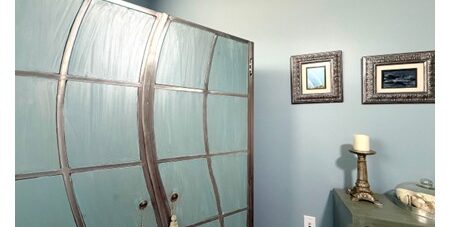
When I moved to the California coast, I ditched my European antiques which worked so well overseas and in colonial Virginia but looked out of place at the beach. I ended up with very whimsical, artsy furnishings that were a perfect fit back then. Years later, the amount of many colors felt too brash, so I painted all of my furniture in a similar color and I painted all of my frames in a pewter wash to give my brain a rest from all of the color stimulus. I also have color-drenched some rooms so that the walls and ceiling are more soothing.
You see, I was working on intuition back then and what I now know is that it was my sensory processing sensitivity at work. My brain was on overload – overstimulated by too much color and variations of shapes and stuff and the lines of the furniture. My brain was working too hard to process all the shapes, colors, and stuff. Because us Highly Sensitive People are deep processors, our brains get tired if there is too much stimulation in our environment to process.
Even my books started to bug me. I tried arranging them by size, color, stacking them – nothing worked. What I found is that I need them behind a cabinet door – out of site so my brain gets a rest. This goes for sounds as well. I once lived in Florida on the water and the sound that carried across the water drove me nuts. I could hear every sound that came from the homes across the water and especially the mowers and blowers at all hours of the day every single day. It was like having jet engines revving up all day outside your window. Insanity for me. I now live where they do our lawns all at one time and I hear the mowers and blowers for about one hour 2-4 times per month in season and nothing but birds in the off-season.
Living in the Washington DC area was very toxic for me and my mental and physical health. Necessary for the work I was doing, but damaging my soul. The constant buzz of activity, helicopters, traffic, density of living, too many people crammed into small spaces, constant commotion and too much cement. Not to mention the toxic political stench that forever hangs in the air. Once Covid hit, I moved out to a smaller town to work remotely and retire/rewire in a bucolic, laid-back, slower-paced environment that is much more supportive of a stress-free daily lifestyle.
Listen to your body and get a gut feel for what bugs you in your space. Be militant about what you allow into your home and create a calming, quiet, supportive space that doesn’t hold bad memories from past lives. Yes, Marie Kondo did have a good idea about things sparing joy – but be honest with yourself about what ACTUALLY gives you joy. And for goodness sake, don’t spend money on a storage unit – just get rid of that extra stuff and stop worrying about it and paying for it. More is not necessarily what you need to be happy, healthy, peaceful, and calm. With all the hectic stuff going on in the world, your home needs to be your sanctuary – what can you do to make it so? Don’t forget pleasant music in the background to help soothe your mind. I haven’t listened to radio in over a decade. The noise of the announcers, traffic reports, and advertisements were assaulting on my ears. Choose your noise wisely so it doesn’t harsh your mellow as we used to say back in the day.
Back to Blogging…Transformed & With a Twist

March 1, 2026 | Posted in Living Hartfully | By Gaia Hart
It’s been a hot minute since we last came together and I’m a little embarrassed and, a lot grateful to the Universe for the interesting twist that came to be that I’m able to connect with you once again in this space.
About a decade ago I had the tech upgraded on this blog and since then, I was unable to get back in to make edits. It just wasn’t happening after I tried every which way including sideways, then I just let it go and focused on my speaking and training career. As it turns out, I was feeling more and more of an obligation to come up with content, and I was getting burnt out juggling so many things that this one just had to drop. I felt it was Divine intervention telling me to put down blogging for a while and concentrate on other things – it was not the time. I let it go and understood that when the time presented itself once again, that it would be unlocked for me to once again share my resources, my lessons, and help others connect to their capacity through blogging.
Enter the Universe and its infinite wisdom. Having retired from full-time corporate work teaching and training international clientele several years ago and transforming my life and lifestyle after learning I was an Empath and an Extroverted, High-Sensation-Seeking, Highly-Sensitive Person in 2020, the doors opened and the code was cracked to once again allow me entry past the firewall and into the blog. Thanks to a dear friend who had a friend who had a husband who was willing to crack the case wide open. It was once again time to start sharing content after all I had learned that had profoundly changed my life in every way and every day, and what has made clear all that was happening to me/for me in my life up to that point.
I’m now intent on sharing the work and words of wisdom of the many from whom I’ve studied. I’m thrilled to share their brain/mind/body/health/environmental/strategic planning work that was instrumental in reframing past life events, managing time/space/self in present day events, and how to strategically plan for future events/space/ways of being and moving through the world that is more in alignment with my natural brain and body connection.
I’m putting a twist on how I work and who I work with – moving away from corporations and organizations to individuals and one-on-one coaching and advising versus keynotes and corporate training and teambuilding events. I’m intent on helping women in particular who are Highly Sensitive and/or High Sensation Seeking Sensitives because it’s such a complex connection, a guide is most helpful to figure out how to move through the world in the best possible way while honoring your very specific set of traits. Much more on this later, but just knowing these traits exist is the first step in how to get the most out of your life and create a lifestyle by design and not default to be your best self.
Motivation and De-Motivation is Contagious: Recognition Resources to Spread

October 4, 2018 | Posted in Leading Hartfully, Living Hartfully | By Gaia Hart
Like the common cold, motivational ways can spread across the workplace. Unfortunately so can un-motivational actions. Sincere recognition and appreciation reap big rewards. I understand some just don’t have a clue when it comes to implementing such practices; so I’ve culled lots of ideas from my resources to help add to your arsenal of positive actions. Please spread the word and infect others with these recognition resources.
- We never seem to get or give enough recognition where it is needed most. Non-cash awards are a sound business investment in the future of your company. A recent study by the Aberdeen Group cited in Incentive Magazine indicates that companies with superior employee recognition grew four times faster, earned $40 billion more and created 140,000 more job opportunities than the average company.
- The American Productivity Center suggests that non-cash programs cost three times less than cash programs and produce similar results.
- “Atta-persons” are not a panacea for improved performance and productivity. These sincere acknowledgements must be accompanied by mutually agreed-upon goals for the individual or team, communication, a respectful relationship and workplace, education, tracking, and measurement to maximize results and lead to long-term behavior changes.
- Balancing between cash, material stuff, and non-cash incentives and recognition is an individualized art and it changes with each team member. Ask them what they desire out of the relationship with their job and then find ways for them to make it happen. Intrinsic motivation and a passion for a cause is the most powerful incentive of all.
- In the midst of economic turmoil and organizational uncertainty, incentives and promotional programs can provide stability and a way to help pull people and entice them out of stressful times. They can be an emotional jump start to show appreciation for employee’s time, loyalty, service, and commitment, and make it easier for them to deal with emotional issues. These acknowledgement programs can bring fun and good spirits back to the workplace and show how much you care about the team pulling together and sticking together through tough times.
- Making a show that the top dogs are cutting back on expenses during financial squeeze times demonstrates to the team that everybody, including the top dogs are tightening their belt. Make a game of who can trim the fat off the financial statement and expenses line item could offer incentives and get suggestions for improving operations. Offering a percentage of the cost savings to the person who suggested it will go a long way to empower and energize staff.
- Start a walking club at work, or a brown bag “lunch and learn” session to make positive use of the lunch hour and encourage healthy habits, networking, and self-improvement. Include topics such as planning for retirement, scrap-booking, refinancing your home, training your dog, communicating with family members, or vegetarian cooking.
- If your organization offers flextime, how about offering a change of schedules with the change of seasons for a change of pace.
- Offer a company-sponsored luncheon or special recognition for the graduates of family members, or offer a small gift from the company to the graduate such as a gift card to a bookstore or computer store to help them in their next phase of life. Endearing your organization to the family members has been proven an effective retention strategy.
- Involve family members in the recognition process or incentive chain. Perhaps offering a catalog of awards or prizes that the worker can receive in exchange for their earned points in a company-sponsored contest or sick-leave, or safety record program. Sending the catalog to their home address where family members may page through the options may be just the incentive a worker needs to spur them on to earn more points for the mountain bike their daughter spotted in the catalog. Sometimes we do more for family members than we do for ourselves.
Remember that motivation is contagious and so is de-motivation. Even self-motivated employees wither within a demoralizing environment. You can’t fake appreciation – it will backfire every time. Ultimately, companies that treat their employees with respect and show concern for their personal and professional well-being are most likely to emerge successful, even in the face of a downturn, or a bad economy. Organizations can foster loyalty by tuning in to their workers and offering them what they want such as flexibility, education, tele-commuting options, and ways to enhance work/life balance. Asking people what they want is the first step to tuning in and getting it right.
, : Comma(n) Sense and Intuition
September 19, 2018 | Posted in Leading Hartfully, Living Hartfully | By Gaia Hart
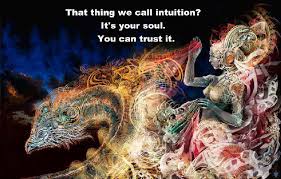
Trust your intuition and use common sense to weigh the options. There is a reason behind gut feelings. Being aware of them could save you some time and energy that could be put toward better causes. Stress overcomes you and zaps your energy when your gut says “no”, and your mouth says “no problem”. Is your body telling you a decision is not authentic to your being?
Trust your intuition and be still enough to listen to your body giving you insight into your decisions. When your instinct says “no way” and your lips say “okay”, then you’ve got a problem which brings on the fight or flight syndrome to one degree or another. Take notice of how often your gut reaction is on target or how often your intuition leads you to a positive outcome. Learning to trust your sixth sense and using common sense will help guide you through some tough decisions or tough situations.
Interviews with female victims of personal attacks have been reported that state many of them felt a sense of fear, or that something was not quite right with the situation or the person just before their attacks. That was their intuition warning them of a dangerous situation.
If something doesn’t feel quite right to you, take stock of why you have that feeling and try to make some sense of it before you act on it. Tune into your gut and listen to your heart and it will give you more energy to put towards other things and help you avoid the stress of a difficult situation.